Showing posts with label Helsinki. Show all posts

Monday, October 5, 2015

WINTER WAR MEMORIES 1939-40


Valto Antero Tolvanen. Karkkila. Summer 1939.Photo: VTK.
    In the summer of 1939 I spent my vacation in Kannas [the Karelian Isthmus] helping with the building of fortifications [Salpa-linja]. I think I may have some pictures of that but they aren’t anything special. 

Salpa Line construction, 1939. 


     The spirit there was very patriotic, and some people even made trips to the border, to Terijoki, where a bridge and a railroad track go over the river.


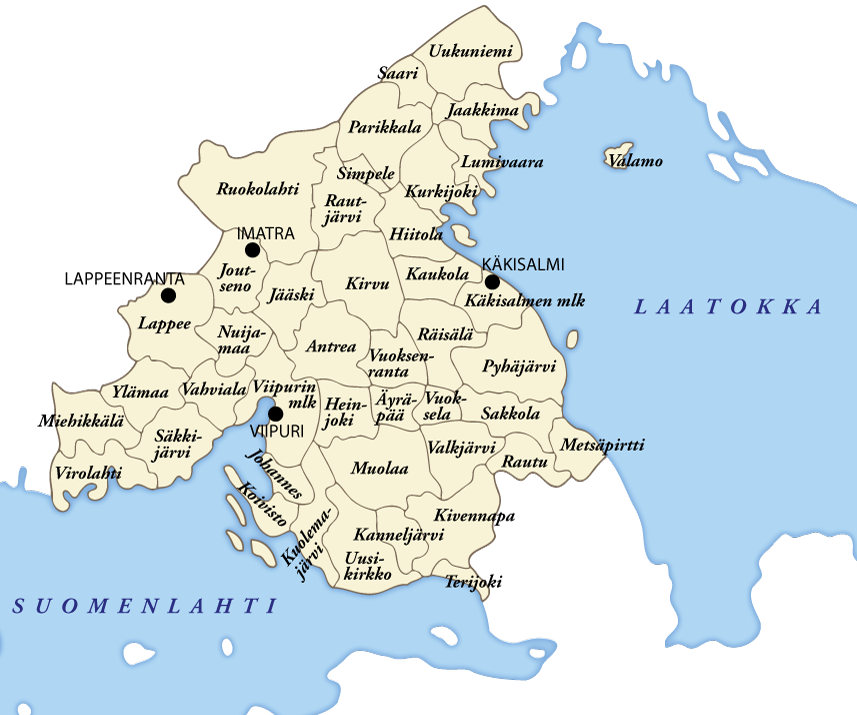
Pre World War 2 districts on the Karelian Isthmus. 


Pre World War 2 map of Terijoki, Finland. 


      With us on the trip were some foul-mouth ruffians who threatened the Russian border guards and in every other way were obnoxious and loud. Maybe that was reason enough to start a war, who knows. But in any case the volunteers built rifle pits and cement bunkers so that we would be more prepared for the coming winter. All of the members of our volunteer militia regiment tried to spend at least a part of their summer vacation helping with the fortifications. 

Volunteer shovel crews in Karkkila, (Kannas), Finland, working on fortifications along the eastern front with Russia. Antero Tolvanen on the left with a shovel over his shoulder, emerging from behind a tree. 1939.


     And then suddenly it was November 30, which is my name day [Anteron Päivä], as well as the day when the Finns commemorate the famous Viipuri Explosion [Viipurin Pamahdus]. As I recall the Viipuri Explosion too place in 1485. So I guess that special day has been commemorated many times since then. 

Olaus Magnus included the Viborg explosion in his 1536 Carta marina.

 
      Early the very next morning, December 1, the Russian bombers came and started bombing. The Russian airfield was in Tallinn [Estonia] – a distance of only 60 kilometers away. And there seemed to be no end to their fleet of planes.

Aftermath of Russian bombing of Helsinki, December 1, 1939.

 
      We didn’t have very many aircraft ourselves, and it was nearly impossible to obtain them from anywhere else in this emergency. But in spite of this the Russians lost over 1200 planes in the next 100 days. The most memorable event which has stayed with me was the heroic effort of Joppe Karhunen who, all by himself, destroyed a whole fleet of Russian planes – 7 of them. 

Joppe Karhunen - Knight Flight Commander, 1939.
     
     And he was not the only one. – Italy sent 50 bombers to our aid, but our good friend Germany stopped them at the border. After all, they had a friendship and defense treaty with Russia as well, and Russia was a big player in the region. Well, on the battlefield they [the Russians] lost over 1800 tanks. And from a speech given by Khrushchev after Stalin’s death, it became evident that the loss of life had been over 1,000,000 men for the Russians. We on the other hand only had about 300,000 men on the front lines. 


      During the Winter War there were all kinds of regulations which meant that many men were not able to serve in the military. For instance, full time government employees such as I was were exempt from servicing in the military, and no one seemed to be able to make changes to these regulations during the Winter War. I was called up, or actually I volunteered, for the Home Guard on behalf of the Postal Service, and since I was the only Home Guard volunteer I was made the Assistant to the Commander of the Home Guard. 

Antero Tolvanen in his home guard uniform with little sister, Sirkka. Helsinki. 


      He was the director of the Post Office yet we rarely saw him performing his Home Guard duties. He had his own interests, but then so did I. This was when I met Aune Irene Mäkinen, who was performing volunteer service of her own working at the switchboard at the bomb shelter. And so we met and fell in love. I had to be on guard duty almost every day and night, and so I hardly ever went home.


Aune (rt.) at the switchboard. Post-Len-Tel. Helsinki, Finland 1939.

 
     That was when Aili and I became officially separated, even though getting together had been very infrequent even a few years before the war.  The feelings between Aune and me blossomed and grew stronger, so that by the time the Winter War was over we were nearly inseparable.

     When my guard duties finally ended I went home, but as soon as I received my summer vacation I left to go build fortifications at Miehikkälä. There was one difference, however, and that was that I

Salpa Line Constrution. Miehikkälä. 1940.
was paid for my work.  First I became the secretary to a certain Lieutenant who was familiar to me from our days at Kannas. He was a Transportation Chief, and when I became familiar with the routine, I was made Transportation Officer. I guess I took care of my duties quite well because as I was leaving the Battalion Commander, Karhu, said to me, "We would have all kinds of work for you here if you stayed."

Finnish Army Commander, Ilmari Karhu.
       In the meantime, however, I had made some new friends, one of whom was Lieutenant Kelhu, the Quarter Master who for some reason wanted to be transferred to Kuusamo. And that’s where I followed him.

Lieutenant Kelhu and Antero Tolvanen. 1940.
      Unfortunately Kelhu was one of those acquaintances who wanted to put down and belittle his associates. He was the "Lord and Master" and everyone else had to lick his boots. He had his own circle of friends from Helsinki who followed him to Kuusamo. And he wanted me to be part of that same group who were willing to do whatever to please their master. It was midwinter in Kuusamo right at that time so there wasn’t much daylight to be seen. Another guy, Iimo, and I started drinking and ignoring out duties, so I didn’t last past the end of January when I had to make my hurried exit back to Helsinki. That was one time when I got my fill of Lapland. I went back to my job at the Post Office – back to sorting the mail as I had done previously.

       I had, however, been on leave for almost six months and because my pay at the fortifications was much better than at the post office, and Aune was taking care of all my affairs in Helsinki, I was soon starting to pay down my debts to a great extent. I took a room with a young couple in Käpylä. I lived only a few blocks from Aune’s home where she had a carefree life living in her father’s privately owned apartment unit. We were able to meet on a regular basis. Aili had signed for my paycheck from the Post Office until now, but when we became separated she demanded that I pay her 800 marks per month for spouse support.

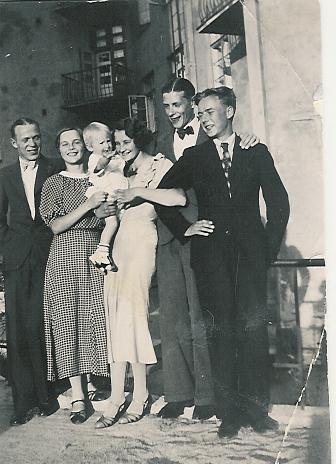
Antero and Aili Tolvanen with daughter Tuula, and several friends. Helsinki. 1936.
         Our  daughter, Tuula, had already gone to Sweden in the fall on 1939 as a war refugee – that’s where many Finnish children were taken to escape the war. I felt sorry for my little girl, but what could I do since I had to build a new life on top of the ruins of my old one. And so it was that I didn’t see Tuula again until after the Continuation War had started. At that point we went our separate ways.


Translated from the original Finnish by Marja-Leena Tolvanen Rogers

MILITARY SERVICE AND HOMEGUARD 1930-1938

Valto Antero Tolvanen. Military Pass. 1928-1930.

      In June 1930 began my 15-month training in the Military Intelligence Corps. We ended up almost immediately at a bootcamp in Perkjärvi [Muolaa district near Viborg on the Karelian Isthmus],


and there we new recruits
got
sandblasted. Clouds of sand flew around us as we boys were made to run and march. Especially in the beginning when we were commanded to sing, and not a single one of us could get even a word out of our mouths, and so we ran. And when we came to a halt, we were ordered to sing once again. So in one day we learned how to do it. Clear as a bell resounded the words and melody of the song “Eskolan Kaisamuori” [Old Lady Kaisa from Eskola] out of the throats of these young recruits, and the Chaplain for the Battery ran out absolutely horrified to demand from the Lieutenant why these boys were singing such irreverent, foul songs. But the Lieutenant could care less what the Chaplain thought. The main thing was that these boys learned the marching songs.


Antero Tolvanen in the Homeguard Military Intelligence Battery unit. 1931.

    And so because of the singing it turned out that I was made the choirmaster for the Battery. Even if I have to say so myself, I already had experience from my choir days, and had a clear, strong baritone voice. So it became my lot to begin some tune, and start it at a pitch that didn’t become too tasking for male voices. And I performed very well. As I was leaving training camp, I had put together several verses for a new marching song. But nothing further ever became of that because the rhythm for my composition was so odd that no one could turn it into a functional marching song. At least not without a lot of practice beforehand. And that was that – my song never made it as a marching son. But I think I can still remember the first verse of it:


                                    An Intelligence boy had just one dream
                                    As he stands awake on guard at camp
                                    That when we finally arrive at the “Castle”
                                    The joys of life will await us,
                                    Hämeenlinna, such a dear place to us,
                                    As we think of you, our song rings out, ... etc.
                                    Remember Korhonen.


      Well, I can’t remember all of the song anymore. It will be a wonder if I ever recall it again. After all it’s been 50 years this summer since I composed it (1931). So the years roll by! I just have to add that it didn’t take very long for me to write that song. I discovered in myself talents that I didn’t even suspect I possessed. Several other songs were subsequently composed. The greatest body of work were the poems I composed to various tunes at a member of the Postal Course. We had quite of few of them, but most often I seemed to have been the composer in between my work and my schooling. Mother had them in her possession once upon a time, but I think she eventually discarded them along with other items. In many of them I had tried to be especially witty to impress the girls.


Antero Tolvanen with buddies in the Homeguard Military Intelligence Battery unit. 1931.

      In the fall after returning from training camp I was in top physical condition. I entered the Non-commissioned Officer training school and there the men were humbled and made to crawl on their bellies.


Antero Tolvanen as a non-commissioned officer trainee. (2nd row, fifth from the left.) Military Intelligence Corps Regiment.1931.
 
       Our training was nearly over when on one of the last days we were on the ground again, crawling along on our bellies in a wet field of hay, and I caught a chill. I dismissed it as a mild case, but by Monday morning I had to report to the medical hut. I had developed angina with an abscess on my neck as well as in my throat, and the medical skills at the camp were not adequate to treat me. The camp doctor, Tuhkanen, tried to lance the abscess in my throat with a surgical scalpel, but it was a useless effort and did nothing for it.

Aili Linnea Vuori and Valto Antero Tolvanen. 1932.


      By now I was in a semiconscious state, and they had to call Aili  to come, as she was my nearest relative. She sat next to my cot. It didn’t help my condition, of course, but at least it managed to raise my spirits. I lay in this state for about ten days until the throat abscess burst on its own. It eased my condition a lot.

      I was starved because I hadn’t eaten anything during all this time – but my throat was so swollen still that nothing went down, not even water which came right back up again. But eventually I was able to eat and did I ever chow down. I ate quite a few bowls of prune soup – nothing else would go down. The abscess in my throat was gone, but as for the one on my neck I had to go to the Tilkka


Tilkka Military Hospital, Helsinki, Finland. 1930's.

Military hospital in Helsinki to have it treated. A small surgical procedure was performed, and a tube was placed in my neck to drain the liquid from the abscess. But it would not heal. As I recall I was at the hospital for two months. The head surgeon had finally had enough and yanked the tube from my neck. He then pinched some nerve endings in my neck with his tweezers. Everything went black before my eyes and I think I even let out a scream.

    Deciding then and there that I didn’t need any more of this kind of torture, I petitioned to be sent back to my unit. And my request was granted. There may even have been a few day’s leave. Then back to my unit and back in the harness. I was made the secretary to the Battery and served in that capacity until the end of my service.


Antero Tolvanen [middle row left] with his unit in the Homeguard Military Intelligence Unit. 1931.

        Another summer was spent in Perkjärvi, but I was left in peace. This tough guy didn’t even have
Map of Finland's Karelian Isthmus before the start of World War Two.

to do the dish washing, as had been the case the previous summer. I did do the dishes for my unit during one week on each shift because I had to take care of the needs for my group. Some superiors stole the tobacco rations for the group, and I went and complained to the Sergeant Major. It was something that shouldn’t have been done, even though I was appealing not for myself but on behalf of my men who insisted I lodge a complaint. So I appealed – and I will remember that lesson for the rest of my life. It turned out to be the usual harassment which new recruits undergo during their first months of service. This is how they produced tough men, and obedient ones as well. On the whole it was not a very pleasant experience. And when the Old Man addressed an underling, he stood at attention, no matter how fine of a family he was from.
       
Valto Antero Tolvanen in his Home Guard uniform with sister Sirkka. Helsinki, 1931.
 

       I was released from active service in 1931, though I eventually signed up as a volunteer in the Helsinki Homeguard.

Translated from the original Finnish by Marja-Leena Tolvanen Rogers

Tuesday, July 26, 2011

LIFE HISTORY 1919 Part II

More Past-times
A new era in our swimming had started. I guess my brothers and other friends gained courage to begin swimming too once I got started. We often spent all day long at the outdoor swimming hall [left: Kumpula outdoor smimming pool] and our swimming skills improved to the point that we started trying out the diving board and knew that we were skilled enough to be able to get back to the stairs at least from there. Naturally we became too wild, as boys of that age often do, and started horsing around on the diving tower as well. We got away with the first few times, but one day as we were playing around on the first level (which was about 8 meters high) one of the supervisors began to climb up the stairs and threatened to throw us down from there. There was nothing else to do but jump off before the caught up to us. It was a new experience for me and it became our favorite past time. We went to play up on the tower like we belonged there and as soon as a supervisor climbed up to throw us off we would let him get almost catch us and then jump off. Pretty soon they realized that they didn’t need to throw us off and that we were fully capable of getting down by ourselves. That same summer I learned how to dive head first – "Swan Dive" - and became pretty good at it.[rt. Showing off his diving form at Kumpula pool in 1984, age 75]. But eight meters was as high as I ever climbed on the tower. That was the only summer when I practiced diving. This was the summer of 1919. The next several summers all the brothers spent in Tohmajärvi.
We had other past times too, and fishing was one of them. It was in the days when everything was homemade. Father helped assemble my first fishing pole. I think I even had a real fish hook too, though I can’t recall for sure. Usually we fished from the dock at the north end of Hernesaarikatu, and our daily catch mostly consisted of ruffs and minnows – the occasional perch would be mixed in once in a while. Our catch was never anything to brag about, but they were fish nevertheless, and got us started fishing.
These were the days when I started whittling boats out of bark and eventually out of real wood. I fashioned the masts and the sails myself, and braided side-railings out of rope, so I was very proud of my schooner. One beautiful summer day I was at the Jätkäsaari pier. Ships from foreign countries were always docked there and all kinds of tempting fragrances hung in the air – spices and fruits, etc. Passenger ships bound for Germany were docked there too: white and handsome, the ship Borekin was docked there as well; I can’t recall the number, but it may have been III. The sea gave off a strong fragrance of salt and seaweed and created in me a yearning for those wonderful faraway places which the ships always encountered along the way on their travels. New York was ever the golden city – I usually pictured it as a very warm place where the asphalt on the streets was so hot in the summer that it would burn the bottoms of your feet. And all those tall buildings and crowds of people – it had to truly be a fairytale land.
I watched the ships and savored the breeze, clutching my little ship tucked safely under my arm. A certain gentleman was watching the ships as well and had a little girl with him who was about my age. To me she looked like an angel, and I must have stood there staring at her. The girl glanced at me, glanced at the little boat tucked under my arm – and wrinkled her little nose at me. This little girl no longer seemed so angelic. But that moment has stayed so fresh in my mind that I can vividly recall all of those feelings. I can’t recapture a picture of the little girl other than that she was dressed in some type of white outfit. But I can vividly recall the warmth of the sun, the light sparkling on the summer waves and then the strong fragrance of the ocean.
Every so often we were able to go with Father on trips to the islands. The ferries were small and shallow, and the furnace was set down in a depression in the middle of the boat. It was always such warm and sheltered place even when it was windy that I was usually stationed somewhere near to it. And then on one occasion Father took us with him to go berry picking somewhere west of Helsinki. I can’t recall anymore how we traveled there, but the trip so stayed with me that I wrote an essay about it in the second form of the lyceum. I had spent so many summers in Karjala that their dialect had become part of me. I recall how Mr. Berg felt that my use of the Karjala dialect was faulty and he corrected my linguistic errors into the proper form, and this lesson has stayed with me so forcefully that I never again wrote using the Karjala dialect. But this incident has preserved the berry picking trip in my memory.
Prayers and Bible Reading
In high school as well as in elementary school we always said a morning prayer, so the format for praying has always stayed with me. And in high school where we poor kids were served a noon meal we always said a blessing on the food before eating and a prayer of thanksgiving at the end of the meal. The prayers weren’t anything elaborate but they served their purpose. The blessing on the food was as follows: “Bless, O Lord, our meal and be with us always. Amen.” And the thanksgiving prayer: “Thanks, O Lord, for our meal. Amen.” Short and powerful, and to the point. Mr. Dahlberg was very religious, as I recall, and so was Mr. Kalarvo. Every day we had a Bible lesson so it awakened out interest in religion very early on.
I read the Bible through as soon as I was able to read – I would have been around 8 or 9 years old. There were a lot of things in the Old Testament that were beyond the comprehension of a child, but I read it anyway. It was the only book, the Bible that is, which we had in our home other than our school books. I had read the Bible three times before I turned 15.
I Discover the Public Library and the Joy of Reading
It may have happened at an even earlier age because later on I discovered the public library which I often visited several times a week. At the Rikhardinkatu Library [left] we were allowed to borrow just one novel and one non-fiction book at a time. It was two kilometers to the library so it took up quite a bit of time during the week if one went there to return and take out books several times a week The distance was only a couple of kilometers, it’s true, but you couldn’t do that too often. That’s why I tried to find the thickest books on the book list and made my own list of them according to which I asked for books. In those days they didn’t have free shelves where you could go find books on your own, but instead you had to tell the librarian which book you wanted and he would go find it for you. On my list was for instance Hansen’s “Across Greenland on Skis,” which I dutifully read from cover to cover. In high school then on one occasion Mr. Korvenkontio asked who had read this book and I was the only one who raised his hand. He was rather surprised and asked me if I hadn’t found it rather dull, and I had to admit having read books that were much more captivating. It was after all, a daily journal, where most entries were started off by recording the weather conditions: cloud cover, wind direction and velocity, temperature, whether the snow conditions were wet or dry, and so forth. It was probably about 700 pages or more, but there is no way to check on it.
In any case, reading became my escape route from the drabness of everyday life into a brighter sphere and the world of imagination. In recall Mother Selma every once in a while remarking that, "There that boy is reading again, and doesn’t hear or see a thing." I totally tuned out to the world around me while reading. One day while we lived at Tokankatu Mother brought me back to reality. We had a table in the middle of the room and I was leaning against one of the corners reading another book, oblivious to my surroundings. Mother gave me a little nudge and said, "Why don’t you go outside for a change rather than always spending your time with your nose buried in a book." The book went clattering on the table and I was quickly startled into reality. Well, Mother was a very perceptive parent and knew that spending time outdoors would do this bookworm a world of good!
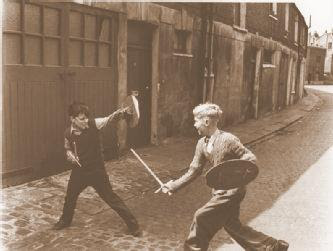
But reading continued to be a passion for me. Around that time I got my hands on a book about the Trojan Wars and found it the most interesting reading. The result was that we made ourselves wooden sword and spears, and turned the bottoms of velour hat boxes into shields. This seems to have been before Father had remarried, so I was probably about 10 years old. We made up a lot of games based around the tales of Troy. During that same time period I was able to borrow—I know it didn’t come from the library – the History of Rome. It consisted of about 10 volumes, but I can’t recall if I borrowed these from some friends. It was fascinating reading, and from then on I have always enjoyed reading about Rome and its history. Latin has always held an interest for me, but up to this point I haven’t done anything about it. Wonder if I should?
Business Ventures
It was probably the first fall after the war that we boys started wanting to earn some money, and the easiest way of course was to sell newspapers. We went to the Työmies book publishers located in the basement of Työväentalo on what is now called Passivuorenkatu. There anyone at all could purchase newspapers at a predetermined discount. Father had given us a shiny silver mark coin and, since we didn’t know the first thing about the whole business, our friend Hono came to our rescue. He took our coin and bought us some newspapers – took some of them for himself which made some of the older boys say that he shouldn’t rob little kids that way. But Hono was a hardnosed wheeler dealer and couldn’t care less about what anyone else said or thought. Well, we couldn’t even peddle the newspapers Hono had left us with, so we ended up bringing home a big stack of unsold papers, and didn’t have anywhere close to a mark to show for our endeavors. So that was the end of our business venture.
One of our other business ventures that comes to mind was selling Christmas cards. One Christmas Eve will forever remain with me because it was chilly with icy rain coming down. My feet were soaked because there were holes in the bottoms of my shoes. I was somewhere near the corner of Fredrikinkatu and Erikinkatu and recall going into a stationary store to sell my cards. The shop lady took pity on me and, from the goodness of her heart, bought one card even though she herself was in the business of selling the very same cards. It didn’t even dawn on me. In those days it was popular to have cards with Alpine scenes with russet skies and the landscape sprinkled with realistic looking snow.
Translated from the original Finnish: Marja-Leena Tolvanen-Rogers